Brazil · Main · Ambitious
Feijoada
Brazil's black bean and pork stew, with rice, garlicky couve, farofa and orange
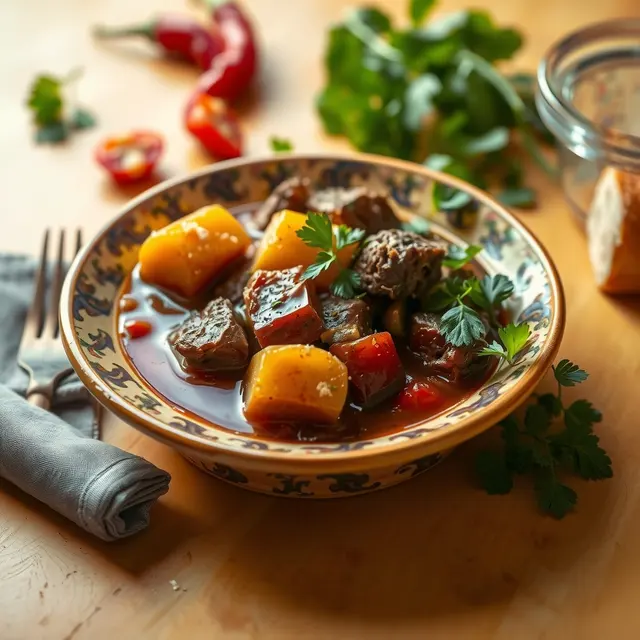
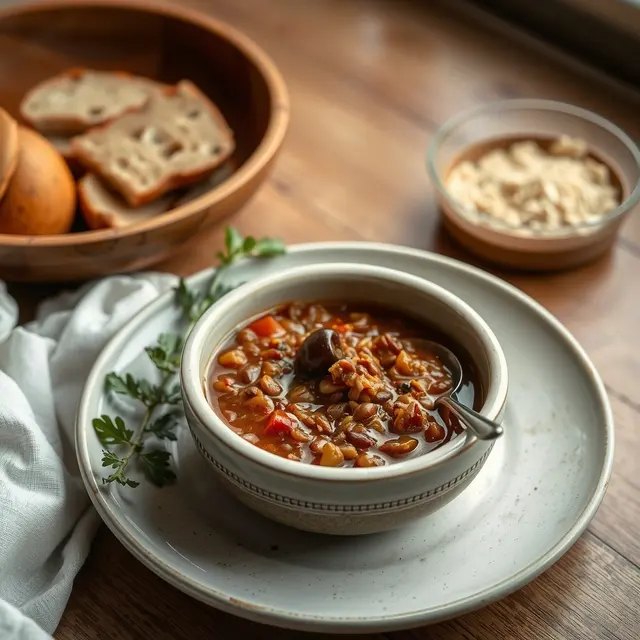
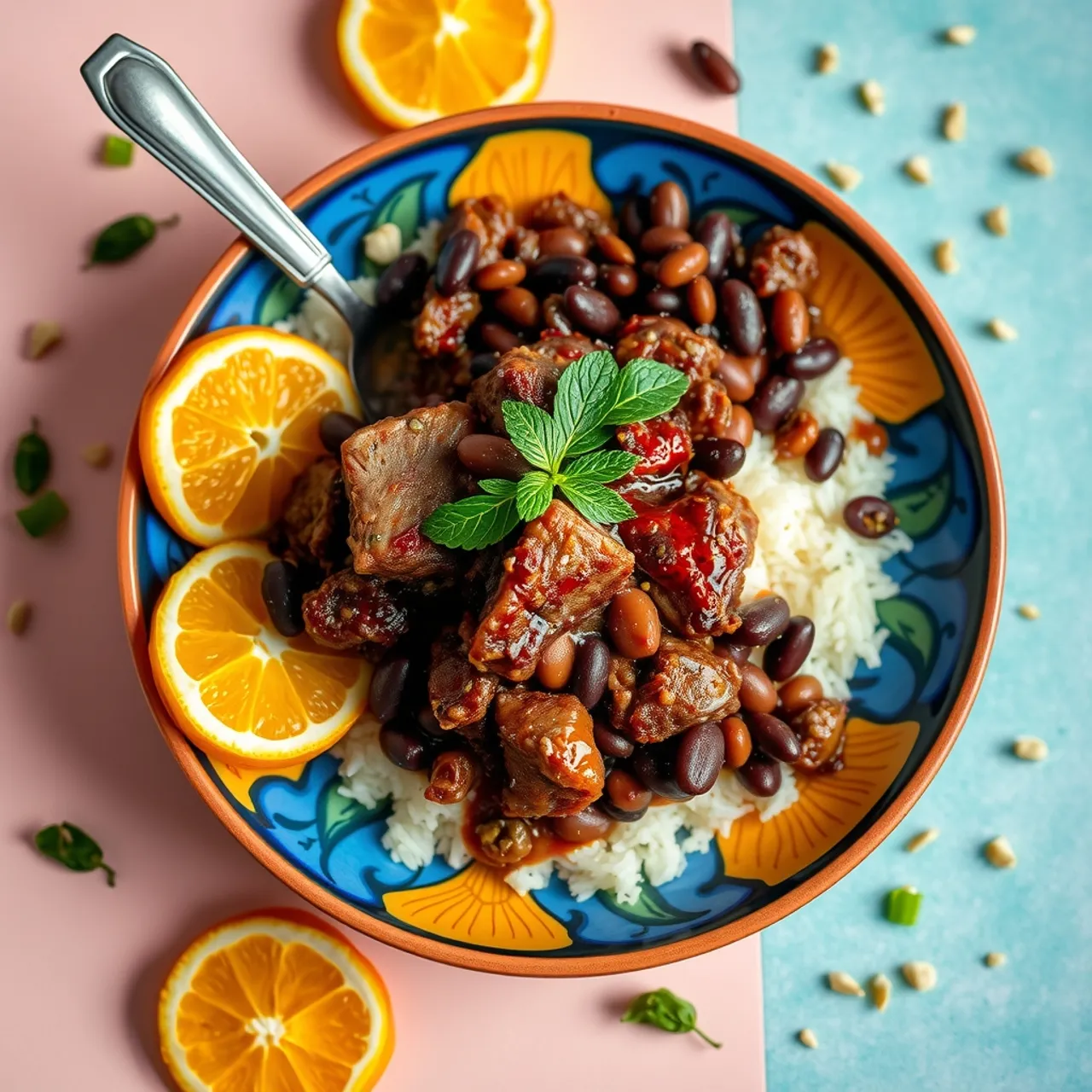
Feijoada is black beans simmered for hours with carne seca, smoked ribs, linguiça and bacon, served with white rice, sautéed collard greens, toasted manioc flour and orange slices. A long, gentle simmer and a ladle of mashed beans stirred back in give a thick, dark, velvety broth.
- Energy
- 924 kcalper serving
- Prep
- 45 min
- Cook
- 3 h
- Rest
- 12 h
- Protein
- 35 g
How was it?
Equipment
- Very large heavy pot (at least 8 l)
- Two large bowls for soaking
- Large frying pan
- Medium saucepan with a lid for the rice
- Wide pan or wok for the couve
- Potato masher or fork
Before you start
- The day before, put the beans and the carne seca in separate bowls of cold water.
- Cut the bacon, slice the linguiça and separate the ribs.
- Chop all the onions and crush or slice all the garlic, keeping each part's portion apart.
- Roll the collard leaves into a tight cigar and cut into ribbons as thin as possible, 1–2 mm.
Method
-
Soak beans and carne seca
500 g dried black beans300 g carne secaSoak the beans and the carne seca in separate bowls of cold water in the fridge for 12 hours. Change the water of the carne seca 3 times.
Done when The beans have doubled in size with smooth, unwrinkled skins; a sliver of carne seca tastes pleasantly salty, not harsh.
Tip Skipping the desalting is the most common reason a feijoada is too salty to eat.
-
Blanch the carne seca
300 g carne secaDrain the carne seca, cover with fresh water in the large pot and simmer over medium heat for 30 minutes. Drain and discard the water.
Done when The meat has softened slightly and the foam on the water has stopped forming.
-
Start the beans
500 g dried black beans3 l water3 leaves bay leavesDrain the beans and put them in the pot with the carne seca, the bay leaves and the water. Bring to the boil over high heat, then simmer over medium-low heat, partly covered, for 1 hour.
Done when The beans are starting to soften but still hold a firm centre, and the liquid is turning inky purple.
-
Brown the pork
2 tbsp vegetable oil150 g smoked bacon300 g linguiça calabresa500 g smoked pork ribsMeanwhile, heat the oil in the frying pan over medium-high heat. Brown the bacon, then the linguiça, then the ribs, in turn, for about 10 minutes in total.
Done when The bacon fat has rendered and everything is browned at the edges; the pan smells smoky.
-
Fry the aromatics
300 g onions6 cloves garlicLower the heat to medium and fry the onions in the pork fat for 6 minutes, then add the garlic for 1 minute.
Done when The onions are soft and golden and the garlic is fragrant but not brown.
-
Simmer long and slow
150 g smoked bacon300 g linguiça calabresa500 g smoked pork ribs300 g onions6 cloves garlic1 tsp black pepper300 g carne seca500 g dried black beansAdd the browned meats, onions and garlic to the beans with the pepper. Simmer over low heat, partly covered, for 1 hour 30 minutes, stirring every 15 minutes and adding hot water if the beans show above the liquid.
Done when The rib meat pulls easily away from the bones and the beans are completely creamy inside.
Tip Stir right to the bottom: beans catch and burn easily once the broth thickens.
-
Thicken the broth
500 g dried black beansScoop out a ladle of beans with a little liquid, mash them to a paste and stir it back into the pot.
Done when The broth becomes visibly thicker and velvety, dark and glossy.
-
Season and finish
to taste saltTaste and add salt only if needed. Simmer uncovered over low heat for 30 more minutes. Remove the bay leaves.
Done when The broth coats a spoon thickly and the flavour is deep, smoky and savoury.
-
Cook the rice
500 g long-grain white rice2 tbsp vegetable oil75 g onion2 cloves garlic8 g fine salt1 l boiling waterHeat the oil in the saucepan over medium heat and fry the onion and garlic for 2 minutes. Stir in the rice for 1 minute, add the boiling water and salt, cover and cook over low heat for 16–18 minutes.
Done when All the water is absorbed, small steam holes dot the surface and the grains are separate and tender.
Tip Leave the lid on for 5 minutes off the heat before fluffing.
-
Make the farofa
250 g toasted manioc flour50 g butter150 g onion2 g fine saltMelt the butter in the frying pan over medium heat and cook the onion for 5 minutes. Add the manioc flour and salt and stir for 3 minutes.
Done when The flour is evenly coated, lightly golden and smells toasted; it feels like dry, loose sand.
-
Sauté the couve
400 g collard greens2 tbsp olive oil3 cloves garlic3 g fine saltJust before serving, heat the olive oil in the wide pan over high heat, add the garlic for 20 seconds, then the collard ribbons and salt. Toss for 2–3 minutes.
Done when The greens are bright emerald, just wilted and still slightly crisp.
Tip Overcooked couve turns olive-grey and soggy. Cook it last and fast.
-
Serve
3 orangesBring the feijoada to the table in its pot with the rice, couve, farofa and orange slices alongside.
Done when The stew is steaming and thick, the couve bright green and the farofa dry and crumbly.
Common mistakes
The feijoada is far too salty.
Fix The carne seca was not desalted. Soak it for 12 hours with several water changes and blanch it, and add salt only at the end after tasting.
The broth is thin and watery.
Fix Simmer uncovered for longer and mash a ladle of beans back into the pot.
The beans stay hard.
Fix Old beans or too little soaking. Use beans from a recent harvest, soak them overnight and keep simmering; do not add salt until they are soft.
The bottom burns.
Fix The heat was too high once the broth thickened. Keep it low and stir to the bottom regularly.
Serving
Serve the feijoada in deep plates over rice, with couve, a spoon of farofa and orange slices on the side; the orange refreshes the palate between rich mouthfuls. In Brazil it is a weekend lunch, often with a caipirinha and hot pepper sauce.
Storage and reheating
Keeps 3 days in the fridge in a covered container. Reheat over low heat with a splash of water, stirring, until it bubbles. The feijoada freezes for up to 3 months; the rice and couve are best made fresh. Store farofa in an airtight jar for up to 1 week.
Make ahead
Feijoada is better made a day ahead: cool it quickly, refrigerate, lift off some of the set fat and reheat. Make the farofa up to 2 days ahead; cook the rice and couve on the day.
Variations
Feijoada completa
Add 500 g of salted pork cuts (ears, trotters, tail), desalted overnight like the carne seca and blanched, with the beans in step 3.
With pressure cooker
Cook the soaked beans with the carne seca for 25 minutes under pressure, release, add the browned meats and simmer uncovered for 40 minutes.
Vegan feijoada
Replace the meats with 400 g of smoked tofu, 300 g of pumpkin and 200 g of mushrooms, browned in oil with 2 teaspoons of smoked paprika. Make the farofa with olive oil instead of butter.