Greece · Main · Ambitious
Moussaka
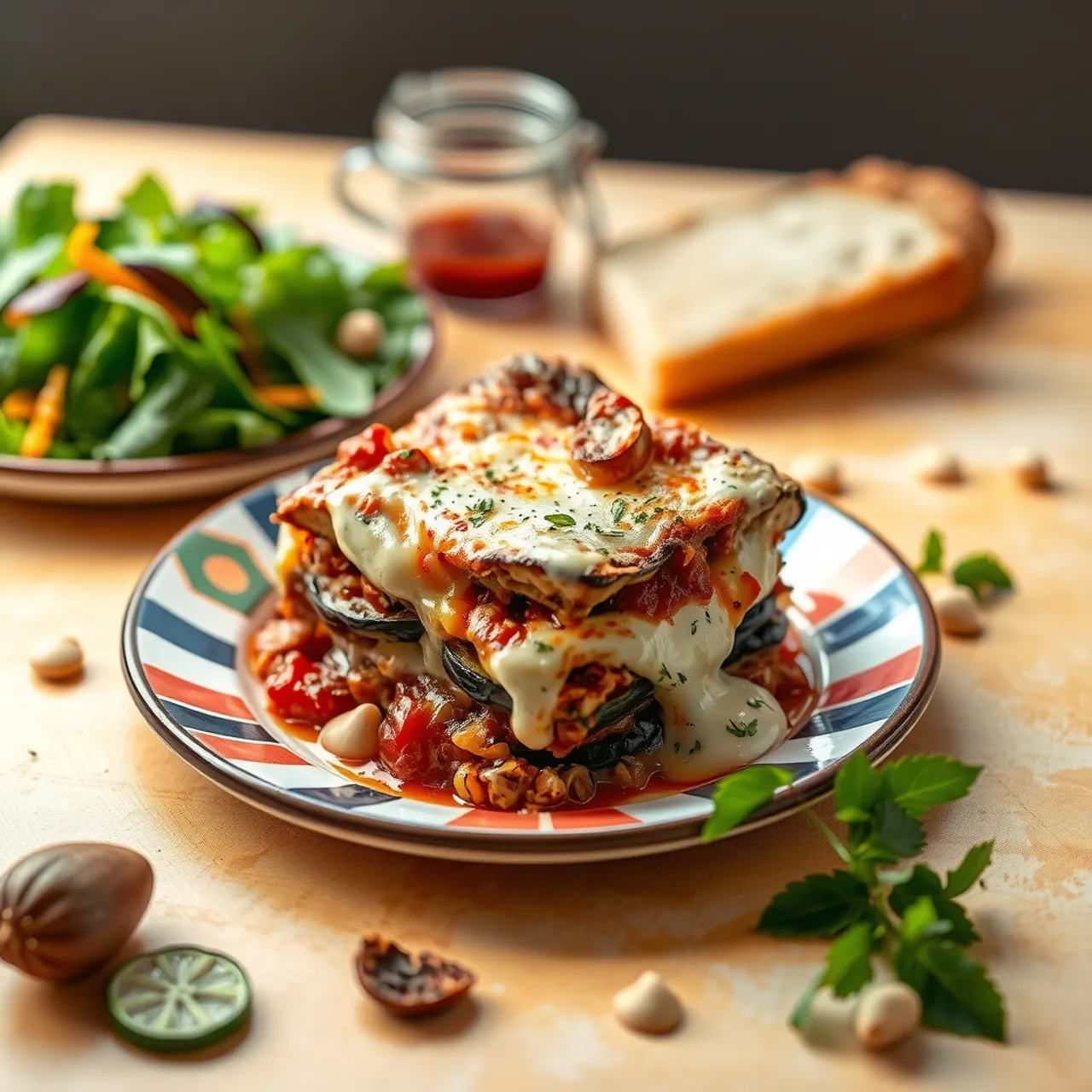
Layers of roasted aubergine and spiced lamb ragù under a thick golden béchamel
Moussaka is a Greek baked dish of roasted aubergine slices layered with a lamb and tomato ragù spiced with cinnamon and allspice, topped with a thick béchamel enriched with egg yolk and kefalotyri cheese. Roasting the aubergines instead of frying them keeps the dish from turning greasy, and resting it for 30 minutes after baking lets it set into clean slices.
- Energy
- 632 kcalper serving
- Prep
- 40 min
- Cook
- 1 h 45 min
- Rest
- 30 min
- Protein
- 27 g
How was it?
Equipment
- Ovenproof dish, about 30 × 23 cm and at least 7 cm deep
- 2 large baking trays lined with baking paper
- Colander
- Large deep frying pan or sauté pan (28 cm)
- Medium heavy-based saucepan for the béchamel
- Balloon whisk
- Pastry brush
- Probe thermometer
Before you start
- Trim the aubergines and cut them lengthways into 1 cm slices.
- Chop the onions, garlic and parsley.
- Grate the kefalotyri and the nutmeg.
- Warm the milk in a saucepan or the microwave until steaming but not boiling.
- Separate the eggs and keep the yolks covered.
Method
-
Salt the aubergines
1.2 kg aubergines15 g coarse saltLayer the aubergine slices in the colander, sprinkling each layer with coarse salt. Leave to drain for 30 minutes, then rinse briefly and press dry between clean tea towels.
Done when Beads of brown liquid have formed on the surface, and after pressing the slices feel slightly limp and dry rather than spongy.
Tip Pressing them dry is what matters. Wet slices steam instead of browning and later make the moussaka watery.
-
Roast the aubergines
1.2 kg aubergines80 ml olive oilHeat the oven to 220 °C. Lay the slices on the lined trays in one layer, brush both sides with the oil and roast for 20–25 minutes, turning once halfway.
Done when The slices are golden brown on both sides, completely soft and floppy when lifted, with no white, spongy flesh left in the centre.
Tip Under-cooked aubergine stays rubbery after baking. If the centres are still pale, give them 5 minutes more.
220 °C · 428 °F -
Soften the onions
2 tbsp extra virgin olive oil250 g onions3 cloves garlicHeat the olive oil in the large frying pan over medium heat. Add the onions and cook for 8–10 minutes, stirring often, adding the garlic for the last minute.
Done when The onions are soft, translucent and just turning pale gold at the edges, and the garlic smells sweet, not sharp.
-
Brown the lamb
750 g lamb minceTurn the heat to high, add the lamb and break it up with a wooden spoon. Cook for 8–10 minutes, stirring now and then, until all the liquid has evaporated and the meat browns.
Done when There are no pink bits left, the meat sizzles in its fat rather than bubbling in liquid, and brown crusty patches form on the base of the pan.
Tip Leave the meat undisturbed for a minute at a time. Constant stirring keeps it grey and boiled.
-
Deglaze with the wine
150 ml dry red winePour in the wine and scrape the base of the pan with the spoon. Let it bubble over high heat for 2–3 minutes.
Done when The raw alcohol smell has gone and the wine has reduced by more than half, leaving the meat moist and glossy.
-
Simmer the ragù
2 tbsp tomato paste1 can chopped tomatoes1 cinnamon stick¼ tsp ground allspice2 leaves bay leaves1 tsp fine saltto taste black pepperStir in the tomato paste and cook for 1 minute, then add the chopped tomatoes, cinnamon stick, allspice, bay leaves, salt and pepper. Bring to a simmer, then turn the heat to low, half cover and simmer for 35–40 minutes, stirring now and then.
Done when The ragù is thick and jammy: a spoon drawn through it leaves a clear path, and oil glistens at the edges.
Tip It must be thick. A runny ragù soaks into the béchamel and the moussaka will not slice cleanly. Add a splash of water only if it starts to stick.
-
Finish the ragù
15 g flat-leaf parsleyRemove the cinnamon stick and bay leaves, stir in the parsley and taste for salt. Take the pan off the heat.
Done when The ragù smells warmly spiced and fresh with parsley, with no liquid pooling when you tilt the pan.
-
Make the roux
80 g unsalted butter80 g plain flourMelt the butter in the saucepan over medium heat. Add the flour and whisk constantly for 2 minutes.
Done when The roux is smooth, pale blond and bubbling, and smells of biscuits rather than raw flour.
-
Cook the béchamel
800 ml whole milk1 pinch nutmegAdd the warm milk a ladle at a time, whisking until smooth after each addition. Add the nutmeg and simmer over medium-low heat for 6–8 minutes, whisking often and reaching into the corners.
Done when The sauce is thick and glossy, like soft custard: it coats the back of a spoon and a finger drawn through it leaves a clean line.
Tip Warm milk and small additions prevent lumps. If lumps appear, whisk hard off the heat before adding more milk.
-
Enrich the béchamel
2 egg yolks80 g kefalotyriTake the pan off the heat and let it cool for 5 minutes, stirring once or twice. Beat in the egg yolks one at a time, then half of the kefalotyri.
Done when The béchamel is smooth, a shade more yellow and slightly thicker, with no specks of cooked egg.
Tip Adding the yolks to boiling sauce scrambles them. The short rest is enough to prevent it.
-
Assemble
1.2 kg aubergines80 g kefalotyriSet the oven to 180 °C. Lay half of the aubergine slices over the base of the dish, overlapping slightly, and spread over all of the ragù. Cover with the rest of the aubergines, pour over the béchamel, smooth it to the edges and sprinkle with the rest of the kefalotyri.
Done when The béchamel forms an even layer about 2 cm thick that covers the aubergines completely, right to the edges of the dish.
Tip Seal the béchamel against the sides of the dish so the ragù does not bubble up through it.
180 °C · 356 °F -
Bake
Bake in the centre of the oven at 180 °C for 45–50 minutes. Check the centre with a probe thermometer: it must reach at least 71 °C.
Done when The top is puffed and deep golden brown with darker patches, the sauce bubbles gently at the edges, and the centre reads at least 71 °C.
Tip If the top browns before 40 minutes, cover it loosely with foil.
180 °C · 356 °F -
Rest before cutting
Let the moussaka rest at room temperature for at least 30 minutes before cutting it into 8 portions.
Done when The top sinks back slightly, and a knife cut holds its layers without the sauce running out.
Tip Cut it straight from the oven and it collapses. Rested, it still serves warm and cuts into neat squares.
Common mistakes
The moussaka is watery at the bottom.
Fix The aubergines were not pressed dry or the ragù was too thin. Dry the slices well after salting and simmer the ragù until a spoon leaves a clear path.
It is very greasy.
Fix The aubergines were fried and soaked up oil. Brush them with oil and roast them instead, and spoon off excess fat from the ragù if your mince is fatty.
The béchamel is lumpy.
Fix The milk was cold or added too fast. Use warm milk, add it a ladle at a time and whisk until smooth before adding more.
The slices fall apart when served.
Fix It was cut too soon. Rest it for at least 30 minutes so the béchamel and ragù set.
Serving
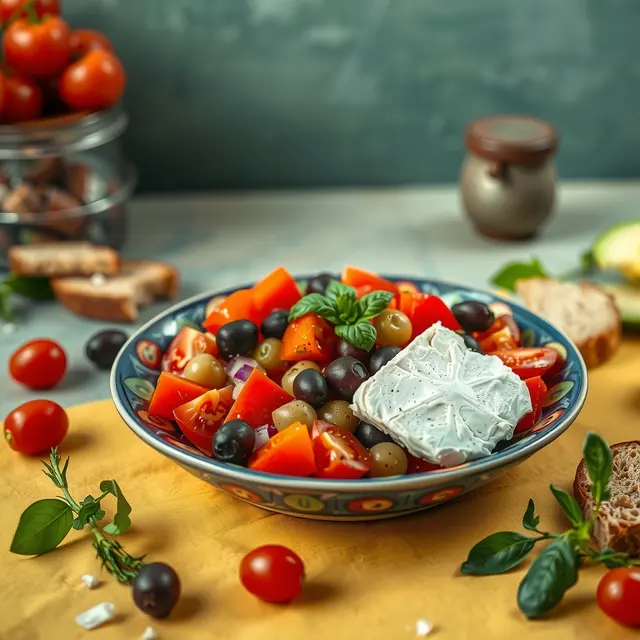
Serve warm rather than piping hot, in squares lifted out with a spatula. A horiatiki salad and crusty bread are the classic partners.
Storage and reheating
Cool and refrigerate within 2 hours. Keeps covered in the fridge for up to 3 days, or frozen in portions for up to 3 months. Thaw overnight in the fridge and reheat covered with foil at 180 °C for 25–30 minutes, until the centre reaches 75 °C.
Make ahead
Roast the aubergines and make the ragù up to 2 days ahead and keep them covered in the fridge. Make the béchamel on the day, assemble and bake, adding 10–15 minutes to the baking time if the fillings are cold. The whole assembled moussaka can also be refrigerated for up to 1 day before baking.
Variations
With a potato layer
As in many Greek homes, peel 500 g of potatoes, slice 5 mm thick, brush with oil and roast with the aubergines for 20 minutes. Lay them in the base of the dish before the first aubergine layer.
Beef moussaka
Use the same weight of beef mince, or half beef and half lamb. The flavour is milder; keep the cinnamon and allspice.
Vegetarian
Replace the lamb with 400 g of cooked brown lentils and 300 g of finely chopped chestnut mushrooms, browned in 2 tablespoons of olive oil over high heat before the wine goes in. Simmer the ragù for 20 minutes only.