Italien · Hauptgericht · Anspruchsvoll
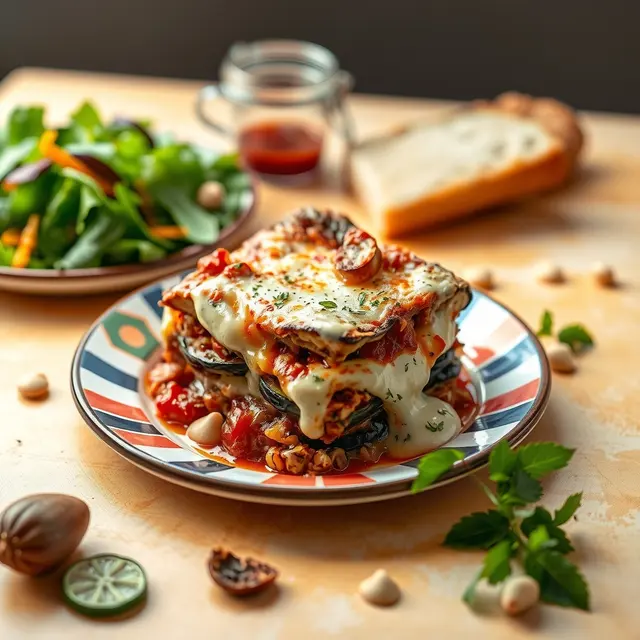
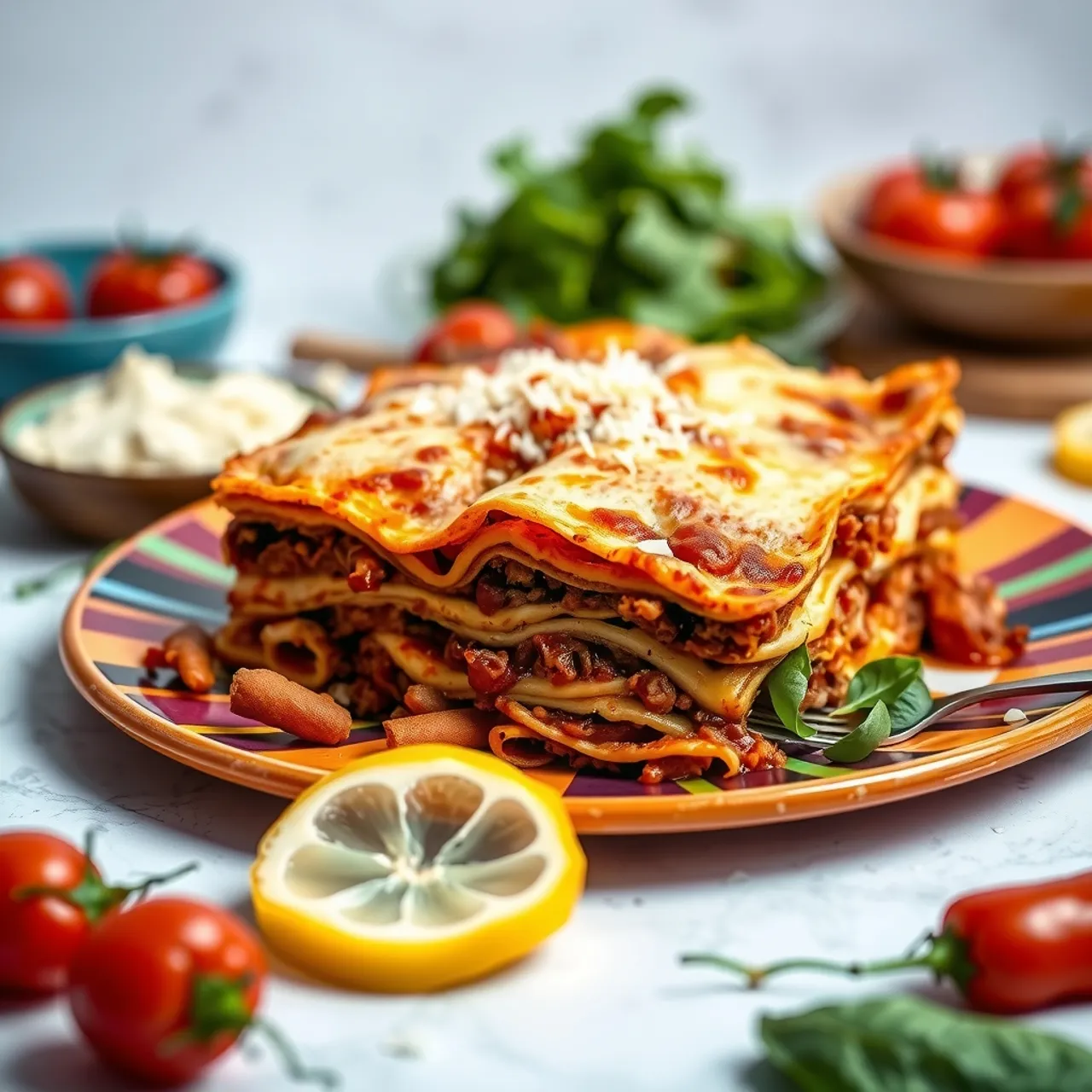
Lasagne alla bolognese
Slow-cooked ragù, nutmeg béchamel and Parmigiano, baked in layers
Layers of egg pasta, a meat ragù simmered for two and a half hours, béchamel and Parmigiano Reggiano, baked until golden. Browning the meat hard, finishing the ragù with milk and resting the dish before cutting give clean, juicy layers.
- Energie
- 725 kcalpro Portion
- Vorbereitung
- 40 Min.
- Kochen
- 3 Std. 30 Min.
- Ruhen
- 20 Min.
- Eiweiß
- 35 g
Wie war's?
Küchengeräte
- Heavy casserole or Dutch oven (4–5 l)
- Saucepan (2 l)
- Balloon whisk
- Wooden spoon
- Baking dish, 30 × 20 cm and at least 6 cm deep
- Aluminium foil
Bevor du anfängst
- Dice the onion, carrot and celery into 3 mm cubes.
- Cube the pancetta.
- Take both minces out of the fridge 20 minutes ahead.
- Heat the stock. Warm the béchamel milk just before you start the roux.
- Grate the Parmigiano.
Zubereitung
-
Render the pancetta
2 EL extra-virgin olive oil100 g pancettaPut the oil and pancetta in a heavy casserole over medium-low heat. Cook for 4–5 minutes, stirring now and then.
Fertig, wenn The fat has turned clear and the cubes are pale gold at the edges, not crisp.
-
Soften the soffritto
120 g onion100 g carrot100 g celeryAdd the onion, carrot and celery. Cook over medium-low heat for 10–12 minutes, stirring every couple of minutes.
Fertig, wenn The vegetables are soft and glossy, the onion is translucent and the pan smells sweet; nothing has browned.
Tipp Dice the vegetables small and evenly. Large pieces stay crunchy and never melt into the sauce.
-
Brown the meat
500 g minced beef250 g minced porkTurn the heat to high and add both minces. Break them up with a wooden spoon and cook for 8–10 minutes until all the liquid has evaporated and the meat starts to fry.
Fertig, wenn No pink remains, the pan sizzles loudly again and brown bits stick to the bottom.
Tipp If the meat releases a lot of water, keep going: it only browns once that water has boiled off.
-
Deglaze with wine
150 ml dry white winePour in the wine and scrape the bottom of the pan. Let it bubble over medium-high heat for 2–3 minutes.
Fertig, wenn The sharp smell of alcohol is gone and almost no liquid is left in the pan.
-
Simmer the ragù
30 g tomato paste400 g tomato passata250 ml beef stock6 g fine saltnach Geschmack black pepperStir in the tomato paste, then the passata, hot stock, salt and a few turns of pepper. Bring to a bare simmer, partly cover and cook over very low heat for 2 hours, stirring every 20 minutes.
Fertig, wenn Only one or two lazy bubbles break the surface at a time; the sauce darkens to a deep brick red and the fat begins to pool on top.
Tipp If it looks dry before the time is up, add a few spoons of hot water. It should stay loose, not stick.
-
Finish with milk
150 ml whole milkPour in the milk and stir. Simmer uncovered over very low heat for 30 minutes more, then taste for salt.
Fertig, wenn The milk has disappeared into the sauce, which is thick, spoonable and coats the back of the spoon. The meat has long passed the safe 71 °C for minced meat.
Tipp The milk softens the acidity of the tomato and makes the meat tender. It does not make the ragù creamy.
-
Cook the roux
70 g unsalted butter70 g plain flourMelt the butter in a saucepan over medium heat. Whisk in the flour and cook for 2 minutes, whisking all the time.
Fertig, wenn The roux bubbles, smells like biscuits and is still pale blond.
-
Make the béchamel
900 ml whole milk1 Prise nutmeg4 g fine saltPour in the warm milk in three additions, whisking hard after each. Simmer over medium-low heat for 6–8 minutes, whisking often, then add the nutmeg and salt.
Fertig, wenn The sauce is smooth with no lumps and coats a spoon thickly; a line drawn with your finger stays clear.
Tipp Keep it slightly runnier than you think: the dry sheets absorb liquid in the oven.
-
Heat the oven
Heat the oven to 180 °C (fan 160 °C) with a rack in the middle. Butter a 30 × 20 cm baking dish.
Fertig, wenn The oven light goes off or the thermometer reads 180 °C.
180 °C · 356 °F -
Build the layers
300 g dried egg lasagne sheets100 g Parmigiano ReggianoSpread a thin layer of béchamel in the dish, then lay sheets on top without overlapping. Repeat ragù, béchamel, a handful of Parmigiano and sheets for 5–6 layers, finishing with béchamel and the last of the Parmigiano.
Fertig, wenn Every sheet is covered at the edges; no dry pasta corners show on the top layer.
Tipp Sauce on every edge matters: exposed dry pasta stays hard and turns brittle in the oven.
-
Bake
Cover with foil and bake for 25 minutes, then uncover and bake 15–20 minutes more.
Fertig, wenn The top is golden with darker brown spots, the edges bubble and a knife slides through the centre without resistance.
180 °C · 356 °F -
Rest before cutting
Take the dish out and let it rest on a rack for 20 minutes before cutting.
Fertig, wenn The bubbling has stopped and a cut square holds its layers instead of sliding apart.
Tipp Cutting straight from the oven makes the layers collapse into a soup.
Typische Fehler
The ragù tastes boiled and grey.
Lösung The meat stewed instead of browning. Use high heat, a wide pan, and wait until all the water has evaporated before adding the wine.
The lasagne is dry and the top sheets are hard.
Lösung Not enough sauce on the sheets. Cover every edge with béchamel and keep the béchamel slightly loose.
The béchamel is lumpy.
Lösung The milk went in too fast or too cold. Add warm milk in three parts and whisk hard; if lumps remain, push it through a sieve.
The slices collapse on the plate.
Lösung It was cut too soon. Rest the lasagne 20 minutes, or bake it a day ahead and reheat.
Servieren
Cut into 8 squares with a sharp knife and lift out with a spatula. Serve with a green salad dressed with lemon and olive oil; more Parmigiano at the table is optional.
Aufbewahren und Aufwärmen
Cool within 2 hours, cover and refrigerate for up to 3 days. Freeze whole or in portions for up to 3 months; thaw in the fridge overnight. Reheat covered at 180 °C for 25–30 minutes until steaming hot in the centre (74 °C).
Vorbereiten
The ragù keeps 3 days in the fridge and tastes better on day two. You can assemble the whole lasagne a day ahead, cover and refrigerate it, then add 10–15 minutes to the covered baking time.
Varianten
Fresh egg pasta
Use 500 g of fresh egg lasagne sheets. They need no boiling if the sauce is loose; bake 5 minutes less.
Green lasagne
The classic Bologna version uses spinach pasta sheets. Use them in exactly the same way.
Vegetarian
Replace the pancetta and meat with 400 g of finely chopped chestnut mushrooms browned hard and 250 g of cooked brown lentils. Use vegetable stock and a hard cheese made without animal rennet. Simmer the ragù 45 minutes instead of 2 hours.