Japão · Sopa · Desafiadora
Shoyu ramen
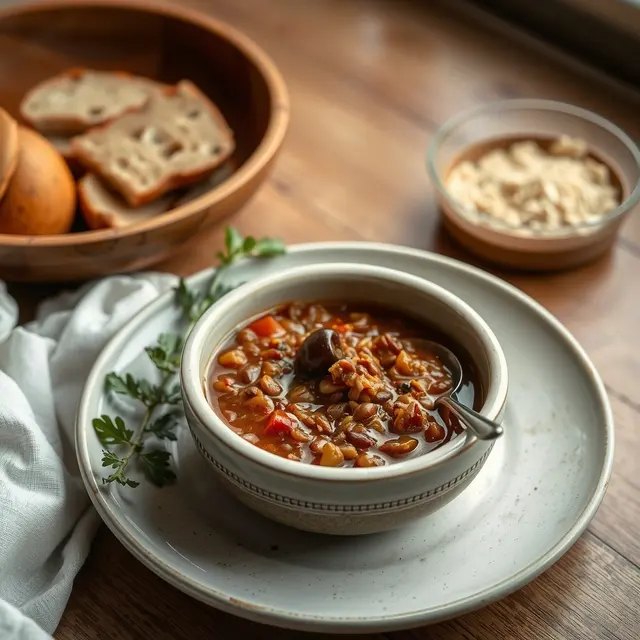
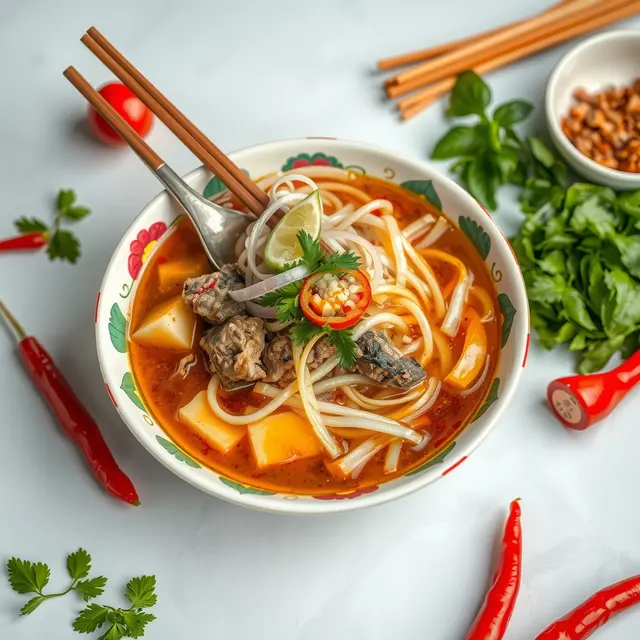
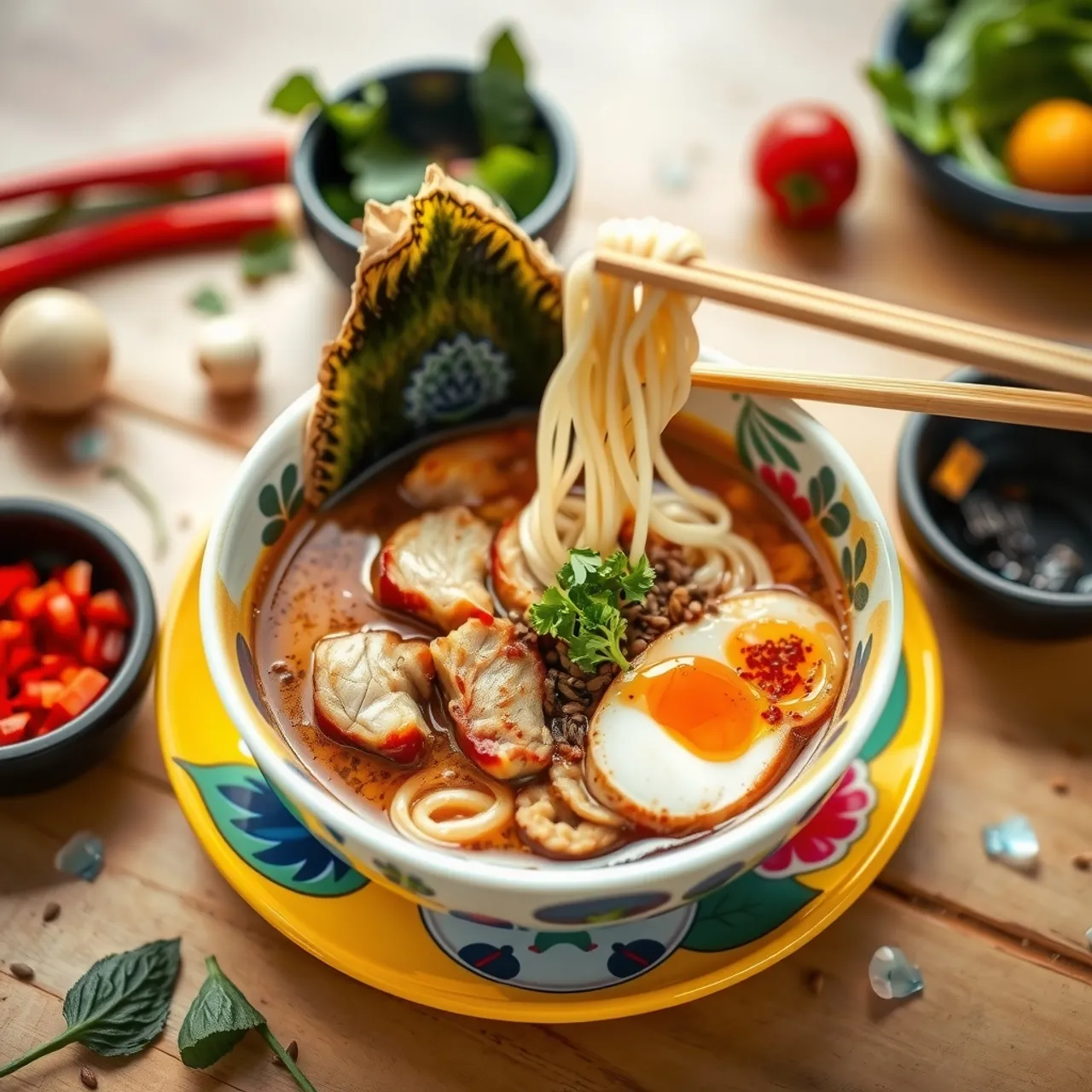
Clear chicken-and-pork broth, soy tare, rolled chashu and a jammy marinated egg
Wheat noodles in a clear chicken-and-pork broth seasoned in the bowl with a soy-based tare, topped with braised rolled pork belly, a soy-marinated soft-boiled egg, bamboo shoots and nori. The broth is blanched first and then held at a bare simmer, so it stays clear and clean-tasting instead of cloudy and greasy.
- Energia
- 890 kcalpor porção
- Preparo
- 40 min
- Cozimento
- 4 h 30 min
- Descanso
- 6 h
- Proteínas
- 34 g
Como ficou?
Utensílios
- Large stockpot (at least 8 l)
- Second pot for blanching, or a large colander and sink
- Heavy saucepan or small casserole for the chashu (about 20 cm)
- Kitchen string
- Small saucepan for the tare
- Fine sieve and a ladle
- Large pot for the noodles, with a noodle basket or spider
- Zip bag or small container for the eggs
- 4 deep bowls, warmed
Antes de começar
- Rinse the chicken wings and pork bones under cold water and remove any blood clots.
- Halve the onion, slice the ginger and crush the garlic.
- Wipe the kombu and keep it with the dried shiitake.
- Take the eggs out only when the water boils; cold eggs crack less and set more predictably.
- Slice the spring onions thinly and keep them in iced water in the fridge so they stay crisp.
Modo de preparo
-
Blanch the bones
1 kg chicken wings1 kg pork bonesPut the chicken wings and pork bones in a pot, cover with cold water and bring to a boil over high heat. Boil for 5 minutes, then drain and rinse every piece under cold running water, rubbing off the grey scum.
Está pronto quando The bones are pale and clean, with no brown foam or dark clots left on them.
Dica This step is what keeps the broth clear. Skipping it leaves a murky, slightly sour-smelling soup.
-
Start the broth
4 l cold waterClean the pot, return the bones and add the cold water. Bring it up over medium-high heat, then lower to low the moment it reaches a simmer and skim for 15–20 minutes.
Está pronto quando Only a little fine white foam still rises, and the liquid looks clear when you push the bones aside.
-
Simmer with aromatics
150 g onion30 g fresh ginger6 dentes garlic50 g green tops of negi or spring onionsAdd the onion, ginger, garlic and negi greens. Keep the pot uncovered on low heat at about 90–95 °C for 3½ hours, topping up with hot water if the bones poke above the surface.
Está pronto quando The surface only trembles with an occasional bubble, the broth is golden and clear, and it smells of roast chicken.
Dica A rolling boil emulsifies the fat and turns the broth cloudy. If you see steady bubbling, pull the pot half off the burner.
92 °C · 198 °F -
Roll the pork belly
400 g skinless pork bellyRoll the pork belly tightly along its long side, fat side out. Tie it firmly with kitchen string every 2 cm.
Está pronto quando The roll holds its round shape when you lift it and no layers gap open.
-
Sear the chashu
400 g skinless pork belly1 colher (sopa) neutral oilHeat the oil in the heavy saucepan over medium-high heat. Brown the pork roll on all sides for 8–10 minutes, turning it every 2 minutes.
Está pronto quando The outside is evenly deep golden-brown and the pan smells of roast pork, not burnt fat.
-
Braise the chashu
100 ml Japanese dark soy sauce100 ml mirin100 ml sake30 g sugar200 ml waterPour off the fat, add the soy sauce, mirin, sake, sugar and water and bring to a simmer. Cover with the lid slightly ajar and braise over low heat for 2 hours, turning the roll every 30 minutes.
Está pronto quando A skewer slides into the thickest part with almost no resistance and the liquid has reduced by about a third.
Dica Let the roll cool in the liquid, then chill it overnight if you can. Cold chashu slices cleanly without falling apart.
-
Boil the eggs
4 eggsLower the eggs into boiling water over high heat and cook for exactly 6½ minutes. Move them straight into iced water for 5 minutes.
Está pronto quando The shells feel completely cold to the touch.
Dica Tap the wide end of each egg against the counter before boiling and they peel far more easily.
100 °C · 212 °F -
Marinate the eggs
4 eggsPeel the eggs and put them in a zip bag with 150 ml of the cooled, strained chashu liquid mixed with 50 ml of water. Press out the air and refrigerate for at least 6 hours, up to 24.
Está pronto quando The whites have turned an even light amber all over.
Dica Marinate longer than 24 hours and the yolk starts to firm up and the white turns rubbery and salty.
-
Make the tare
80 ml Japanese dark soy sauce (koikuchi)30 ml mirin30 ml sake5 g katsuobushi (bonito flakes)Warm the sake and mirin in the small saucepan over medium heat for 1 minute. Add the soy sauce and katsuobushi, heat to about 80 °C without boiling, then take it off the heat, steep for 10 minutes and strain.
Está pronto quando Small wisps of steam rise but there are no bubbles, and the tare smells smoky and deeply savoury.
80 °C · 176 °F -
Steep the kombu and shiitake
10 g kombu4 dried shiitake mushroomsTurn off the heat under the broth. Add the kombu and dried shiitake and let them steep for 30 minutes, then strain the broth through the fine sieve.
Está pronto quando You have about 2 litres of clear, amber broth that smells of the sea as well as chicken.
Dica Kombu boiled for long turns slimy and bitter, which is why it goes in off the heat.
-
Save the fat
Let the broth stand for 5 minutes and skim the clear fat from the surface into a small bowl. Keep about 4 teaspoons for the bowls and discard the rest.
Está pronto quando The fat is clear yellow and the broth below it shows only small dots of oil.
-
Slice the chashu
400 g skinless pork bellyRemove the string and cut the chashu into slices 5 mm thick. Warm the slices in a dry pan over medium heat for 1 minute per side, or in a ladle of hot broth.
Está pronto quando The slices are warm through and the fat edges turn glossy and lightly caramelised.
-
Cook the noodles
520 g fresh ramen noodlesReheat the broth until steaming, around 90 °C. Shake the noodles loose and cook them in a large pot of boiling unsalted water over high heat for 1½–2 minutes, or as the packet says, then drain well.
Está pronto quando The noodles are springy and bend with a slight snap; they have lost their raw floury taste.
Dica Cook the noodles in plenty of plain water, never in the broth: their starch would cloud it.
-
Assemble the bowls
3 spring onions80 g menma (seasoned bamboo shoots)4 nori sheets4 eggsPut 2 tablespoons of tare and 1 teaspoon of the saved fat in each warm bowl, then ladle in about 450 ml of hot broth and stir. Add the noodles, fold them once, and top with chashu, a halved egg, menma, spring onions and a sheet of nori.
Está pronto quando The broth is a clear deep brown with fine golden droplets on top, and the egg yolk is jammy and orange.
Dica Taste one spoon of broth before adding the noodles. Add tare a teaspoon at a time if it tastes flat.
Erros comuns
The broth is cloudy and greasy.
Solução It boiled. Blanch the bones first and keep the broth at a bare simmer, around 90–95 °C, from start to finish.
The soup is too salty.
Solução Tare goes in the bowl, not the pot, so you control it per serving. Start with 1½ tablespoons and add more after tasting.
The egg yolks are hard.
Solução The eggs cooked too long or were not chilled straight away. Time exactly 6½ minutes from when they go into boiling water, then iced water at once.
The chashu falls apart when sliced.
Solução It was sliced warm. Chill the roll in its liquid for several hours, slice it cold, then warm the slices.
The noodles are soft and bloated.
Solução They sat in the broth too long or were overcooked. Assemble the bowls last and serve within a minute.
Como servir
Serve immediately in deep bowls warmed with hot water. Put out shichimi togarashi and toasted sesame seeds at the table, and eat the noodles first, while they are still springy.
Conservação e reaquecimento
Broth keeps 3 days in the fridge or 3 months frozen. Chashu keeps 4 days in the fridge in its liquid. Marinated eggs keep 2 days. Store noodles separately and always cook them fresh; reheat the broth until it boils.
Adiante o preparo
Make the broth, tare, chashu and eggs 1–2 days ahead. On the day, only the noodles and reheating are left, which takes 15 minutes.
Variações
All-chicken broth
Replace the pork bones with another 1 kg of chicken wings or carcasses. The broth is lighter and ready after 3 hours of simmering.
Chicken chashu
Roll skin-on boneless chicken thighs instead of pork belly and braise for 40 minutes, until the centre reaches 74 °C.
Vegan shoyu ramen
Make the broth with 20 g kombu, 40 g dried shiitake, roasted onion, charred leek and 3 l water, steeped for 1 hour without boiling. Make the tare without katsuobushi, use egg-free noodles and top with pan-fried tofu, corn and blanched bean sprouts.