China · Main · Medium
Mapo tofu
Sichuan silken tofu in a fiery, numbing broad-bean chilli sauce with minced pork
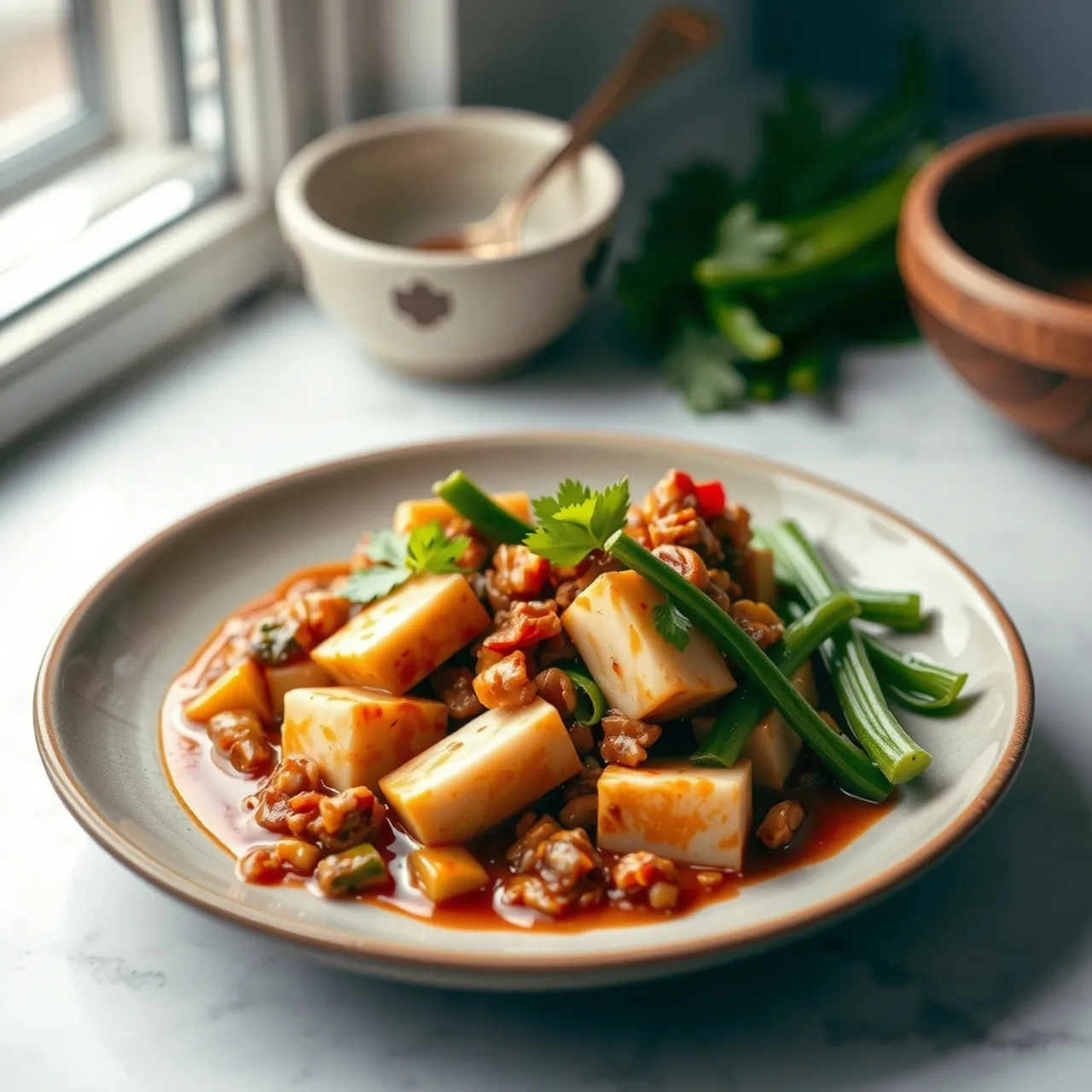
Silken tofu simmered in a red, oily sauce of Pixian doubanjiang, fermented black beans, chilli and crisp minced pork, finished with toasted ground Sichuan pepper. Blanching the tofu in salted water first firms it so the cubes stay whole, and frying the bean paste slowly in oil gives the sauce its deep red colour.
- Energy
- 355 kcalper serving
- Prep
- 15 min
- Cook
- 15 min
- Protein
- 16 g
How was it?
Equipment
- Wok or deep frying pan (30 cm)
- Saucepan (3 l) for blanching
- Small dry frying pan
- Mortar and pestle or spice grinder
- Wok spatula and a ladle
- Slotted spoon
Before you start
- Cut the tofu into 2 cm cubes on a board and slide them off the board into the blanching water when needed, rather than picking them up.
- Chop the doubanjiang finely if it has large pieces of bean or chilli.
- Rinse and roughly chop the black beans; chop the garlic and ginger.
- Stir the cornflour into 3 tablespoons of the stock and keep the rest of the stock aside.
Method
-
Toast the Sichuan pepper
2 tsp Sichuan peppercornsToast the peppercorns in the small dry pan over low heat for 2–3 minutes, shaking often. Grind them to a fine powder and set aside.
Done when The husks darken slightly, a few start to smoke and the kitchen smells of citrus and pine.
Tip Grind them only after toasting and use the same day; the numbing effect fades within hours.
-
Blanch the tofu
1.5 l water1 tsp salt600 g silken tofuBring the water and salt to a bare simmer, about 90 °C, over medium heat. Slide in the tofu cubes and leave them for 2 minutes without stirring, then keep them in the hot water off the heat.
Done when The cubes look slightly firmer, hold their edges and wobble without breaking when you nudge one with a spoon.
Tip A rolling boil breaks silken tofu. Keep the water just shivering.
90 °C · 194 °F -
Fry the pork
55 ml sunflower oil150 g minced pork1 tbsp Shaoxing rice wineHeat the wok over high heat, add a quarter of the oil and the pork. Fry for 3–4 minutes, breaking it up, until it is cooked through (71 °C) and crisp. Splash in the Shaoxing wine and stir until it evaporates.
Done when The pork is in small brown crumbs, the fat in the wok is clear and the meat crackles rather than steams.
-
Fry the bean paste
55 ml sunflower oil45 g Pixian doubanjiangPush the pork to one side and turn the heat to medium-low. Add the rest of the oil and the doubanjiang to the space and fry for 1–2 minutes, stirring constantly.
Done when The oil has turned a deep brick red and the paste smells rich and toasty, not raw or sour.
Tip Too much heat burns the paste and makes the sauce brown and bitter. Keep it sizzling gently.
-
Add the aromatics
10 g fermented black beans (douchi)3 cloves garlic10 g fresh ginger2 tsp ground Sichuan chilliAdd the black beans, garlic, ginger and chilli powder and stir-fry for 30 seconds, then stir everything together with the pork.
Done when The garlic and ginger smell sweet and fragrant, and the chilli has darkened without blackening.
-
Add the stock
250 ml chicken stock2 tsp light soy sauce1 tsp sugarPour in the stock, soy sauce and sugar, turn the heat to medium-high and bring to a simmer.
Done when The sauce bubbles steadily with a layer of red oil floating on top.
-
Simmer the tofu
600 g silken tofuLift the tofu out of the water with the slotted spoon and slide it into the sauce. Turn the heat to medium and simmer for 4–5 minutes, nudging the cubes gently with the back of the ladle instead of stirring.
Done when The tofu has taken on a pale orange tint and the sauce has reduced by about a third.
Tip Push from the edge of the wok towards the centre with the back of a ladle. A spatula cuts silken tofu to pieces.
-
Thicken the sauce
12 g cornflourStir the cornflour mixture and pour it in three additions, about 20 seconds apart, gently swirling the wok after each one.
Done when The sauce turns glossy and clings to the tofu, and the oil separates into a red layer at the edges.
Tip Adding the starch in stages gives a sauce that coats rather than turning gluey.
-
Add the garlic sprouts
40 g garlic sprouts (suan miao)Scatter in the garlic sprouts and simmer for 30 seconds more over medium heat.
Done when The sprouts are bright green and just wilted.
-
Finish with pepper
2 tsp Sichuan peppercornsTip the tofu into a deep serving dish and sprinkle the ground Sichuan pepper over the top.
Done when Red oil pools around the edges, the tofu cubes are whole and the pepper smells sharp and floral.
Common mistakes
The tofu breaks into mush.
Fix Blanch it in barely simmering salted water first and push it gently with the back of a ladle; never stir with a spatula.
The sauce is brown and tastes flat.
Fix Fry the doubanjiang over medium-low heat until the oil turns red before adding any liquid.
It is far too salty.
Fix Doubanjiang and black beans are very salty. Use unsalted stock and taste before adding the soy sauce.
No numbing tingle.
Fix Toast and grind the Sichuan pepper fresh, and add it at the end rather than cooking it in the sauce.
Serving
Serve straight from the wok with plenty of steamed jasmine rice and a plain stir-fried green vegetable, such as pak choi with garlic, to balance the heat.
Storage and reheating
Keeps 2 days in the fridge, covered. Reheat gently in a pan over low heat with a splash of water until hot through; the tofu softens further. Do not freeze.
Make ahead
Toast the peppercorns and chop the aromatics up to 1 day ahead and keep them sealed. Cook the dish just before serving.
Variations
With beef (Chen Mapo style)
Use 150 g of minced beef instead of pork and fry it until dry and crisp, about 5 minutes. This is the original Chengdu version.
Milder
Halve the chilli powder and use 30 g of doubanjiang. The sauce is less red but keeps its savoury depth.
Vegan
Replace the pork with 150 g of finely chopped fresh shiitake, fried over high heat until browned, and use vegetable stock instead of chicken stock. Check that your doubanjiang contains no animal products.