Italy · Soup · Easy
Minestrone
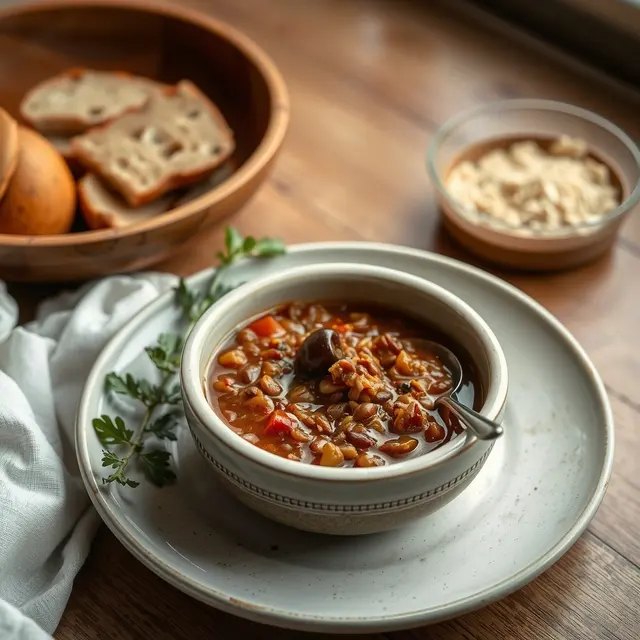
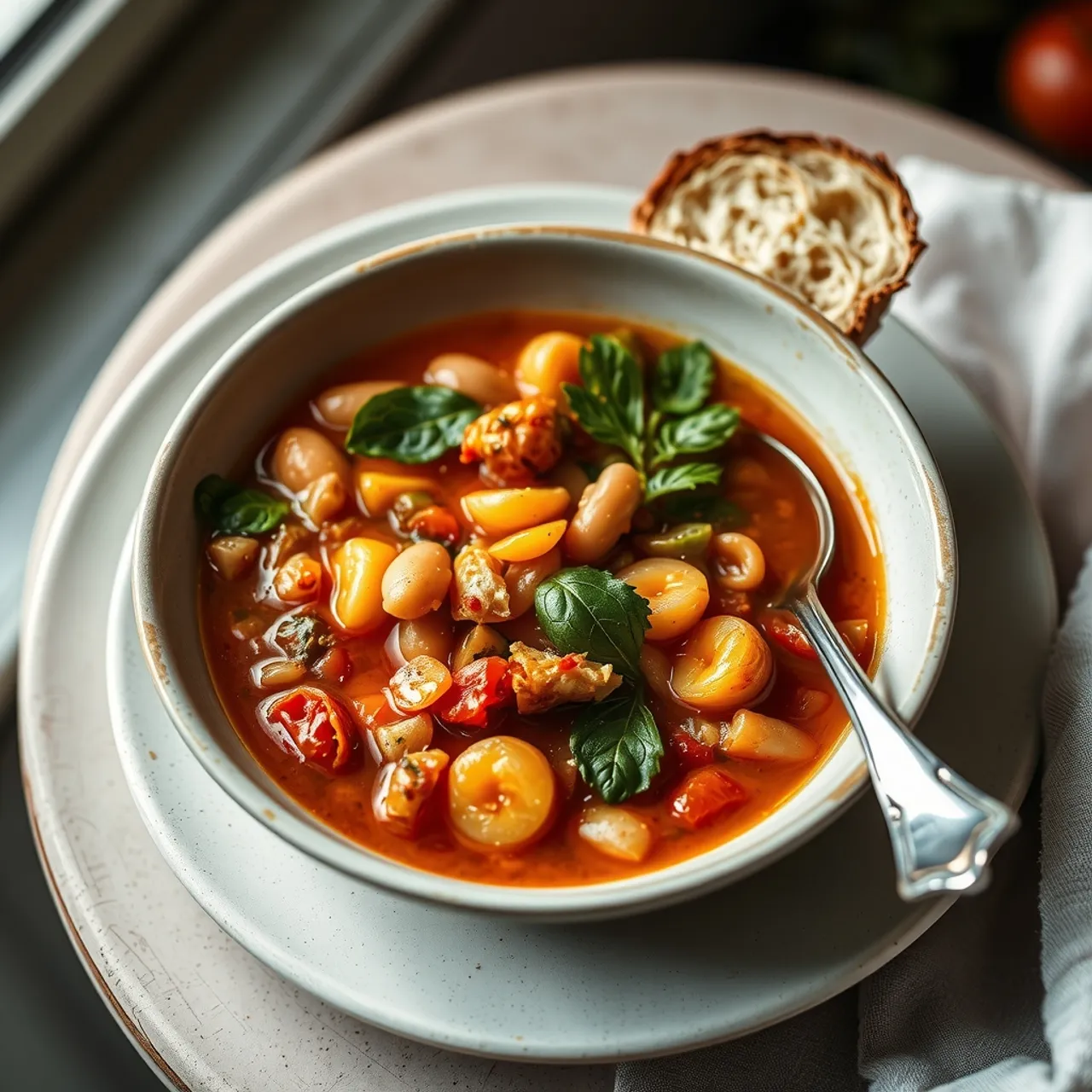
Italian vegetable soup with borlotti beans, ditalini and a parmesan rind
A thick soup of soffritto, seasonal vegetables, borlotti beans and small pasta, simmered with a parmesan rind and finished with olive oil and basil. Adding the vegetables in order of cooking time keeps each one intact, and the rind gives the broth depth without any stock.
- Energy
- 340 kcalper serving
- Prep
- 25 min
- Cook
- 1 h
- Rest
- 5 min
- Protein
- 13 g
How was it?
Equipment
- Heavy soup pot (at least 5 l)
- Wooden spoon
- Ladle
- Chopping board and chef's knife
- Fine grater
Before you start
- Dice the onion, carrot and celery finely and evenly, about 5 mm.
- Cut the potatoes and courgettes into 1.5 cm cubes and the green beans into 2 cm lengths.
- Shred the cabbage and crush the tomatoes by hand in their juice.
- Drain and rinse the beans.
- Put the water on to heat in a kettle or saucepan.
Method
-
Cook the soffritto
60 ml extra-virgin olive oil150 g onion150 g carrots150 g celery stalksHeat three quarters of the olive oil in the pot over medium-low heat. Add the onion, carrot and celery and cook for 10 minutes, stirring often.
Done when The vegetables are soft, the onion is translucent and the pot smells sweet; there is no browning.
Tip Do not rush this step: a slow soffritto is what gives minestrone its flavour when there is no stock.
-
Add the garlic
2 cloves garlicAdd the garlic and cook for 1 minute over medium-low heat.
Done when The garlic smells fragrant and has softened but not coloured.
-
Coat the potatoes and beans
300 g floury potatoes150 g green beansAdd the potatoes and green beans and stir for 2 minutes over medium heat.
Done when The vegetables are glossy with oil and the potato edges look slightly translucent.
-
Add the tomatoes
1 can whole peeled tomatoesAdd the crushed tomatoes with their juice and simmer for 5 minutes over medium heat.
Done when The tomatoes have thickened slightly and darkened a shade, coating the vegetables.
-
Simmer the broth
1.5 l water1 parmesan rindPour in the hot water, add the parmesan rind and bring to the boil over high heat. Lower to a gentle simmer over low heat and cook for 20 minutes, partly covered.
Done when The surface trembles with small bubbles and the potatoes are just tender at the edges.
-
Add the courgette and cabbage
250 g courgettes200 g Savoy cabbageAdd the courgette and cabbage and simmer for 15 minutes over low heat, stirring now and then.
Done when The cabbage is soft and the courgette is tender but still holds its shape.
-
Add the beans
1 can borlotti beansAdd the borlotti beans, crushing a ladleful of them against the side of the pot, and simmer for 5 minutes.
Done when The broth has turned thicker and slightly creamy from the crushed beans.
-
Cook the pasta
120 g ditaliniRaise the heat to medium, add the ditalini and cook for 9–10 minutes, stirring often so it does not stick to the bottom. Add a splash of hot water if the soup gets too thick.
Done when The pasta is cooked through with a slight bite, and a spoon drawn through the soup leaves a brief trail.
-
Season and rest
8 g fine saltto taste black pepper1 parmesan rindTake out the parmesan rind, season with salt and pepper, and leave the soup off the heat for 5 minutes.
Done when The soup tastes rounded and savoury, and the steam has calmed.
Tip Taste before salting: the rind has already added some salt.
-
Finish and serve
60 ml extra-virgin olive oil1 bunch basil30 g Parmigiano ReggianoLadle into bowls, drizzle with the remaining olive oil and scatter with torn basil and the grated parmigiano.
Done when The olive oil forms bright green-gold pools on the surface and the basil smells fresh.
Common mistakes
The pasta is bloated and soft.
Fix Add the pasta only at the end and serve straight away. If you plan leftovers, cook the pasta separately and add it to each bowl.
The broth tastes watery.
Fix The soffritto was too short or the rind was missing. Give the soffritto its full 10 minutes and crush some beans to body the broth.
The vegetables turn to mush.
Fix Add them in order: potatoes and beans first, courgette and cabbage later, so nothing overcooks.
The soup sets thick in the fridge.
Fix The pasta and potatoes keep absorbing liquid. Loosen with hot water when reheating and check the seasoning again.
Serving
Serve hot or warm in deep bowls with crusty bread. In summer, minestrone is also eaten at room temperature, with an extra drizzle of olive oil.
Storage and reheating
Keep covered in the fridge for up to 3 days. Freeze without the pasta for up to 3 months. Reheat over medium heat until simmering, adding hot water as needed.
Make ahead
Make the soup up to the end of step 7 a day ahead and refrigerate. Bring it back to a simmer and cook the pasta in it just before serving.
Variations
Vegan
Leave out the parmesan rind and the grated parmigiano. Add 1 tablespoon tomato paste with the garlic for depth and finish with a little more olive oil.
Minestrone alla genovese
Stir 2 tablespoons of basil pesto into the pot off the heat just before serving, instead of the torn basil. Pesto contains pine nuts and cheese.
With rice
Replace the ditalini with 100 g arborio rice and simmer for 15–18 minutes instead of 10. The soup is then gluten-free; leave out the rind and parmigiano to make it dairy-free as well.
Spring minestrone
Replace the cabbage with 150 g peas and a bunch of chopped chard, and the potatoes with young new potatoes. Add the peas with the pasta.