Italy · Main · Medium
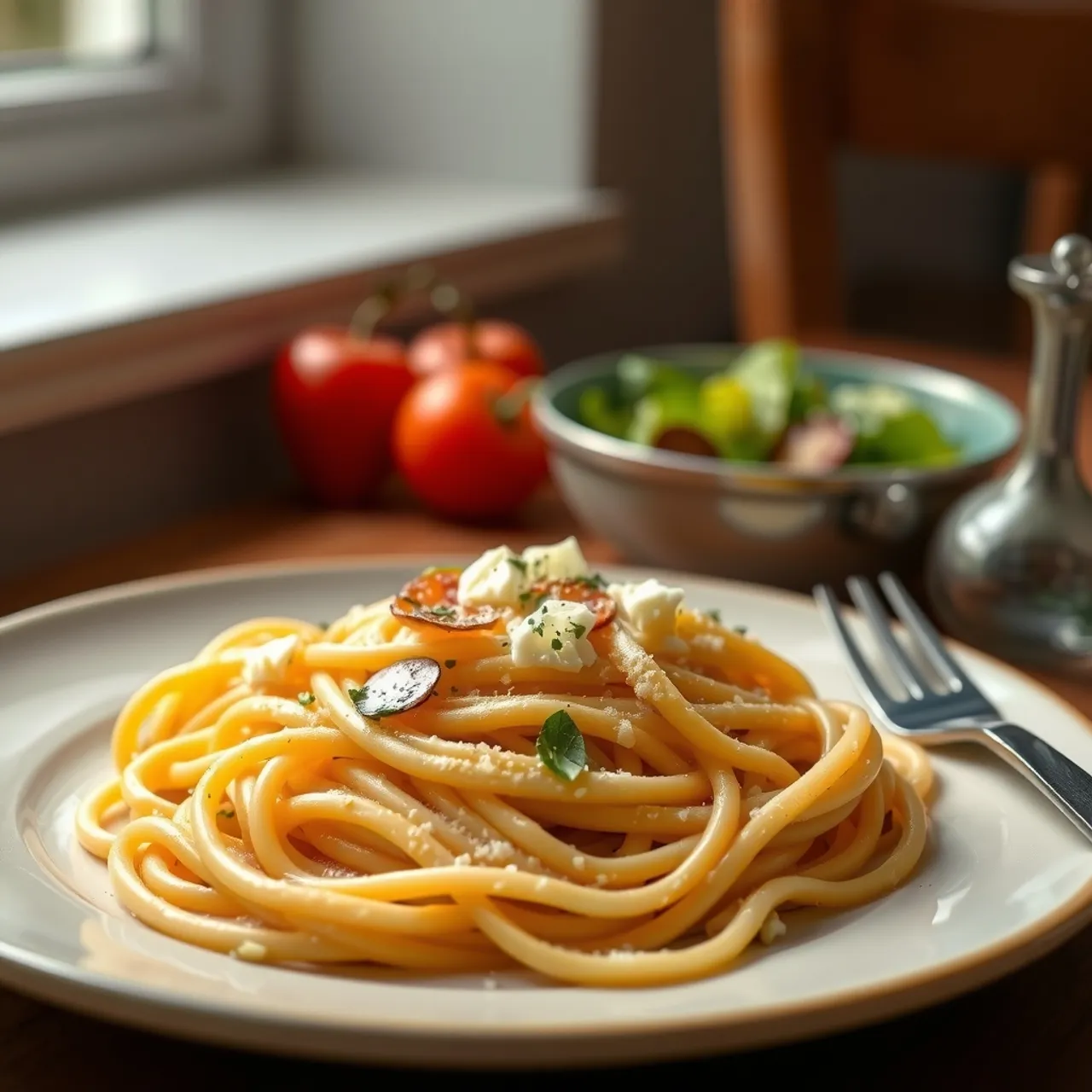
Spaghetti carbonara
Rome's egg-and-pecorino pasta, glossy and without cream
Spaghetti tossed with crisp guanciale, egg yolks, pecorino romano and plenty of black pepper. The sauce is cooked by the heat of the pasta off the stove, so it turns silky instead of scrambling.
- Energy
- 690 kcalper serving
- Prep
- 10 min
- Cook
- 15 min
- Protein
- 29 g
How was it?
Equipment
- Large pot (at least 5 l)
- Wide frying pan (28 cm), big enough to toss all the pasta
- Mixing bowl
- Fine grater (Microplane)
- Tongs
- Ladle and a heatproof mug for pasta water
Before you start
- Take the eggs out of the fridge 30 minutes ahead. Cold eggs set unevenly.
- Cut the guanciale: remove the hard rind, slice 5 mm thick, then cut into 1 cm strips.
- Grate the pecorino finely. Keep 10 g aside for serving.
- Crack the peppercorns coarsely in a mortar or with the base of a pan.
Method
-
Heat the water
4 l water30 g coarse saltBring the water to a rolling boil over high heat. Add the coarse salt only when it boils.
Done when Large bubbles break the surface continuously and do not stop when you stir.
Tip Use less salt than usual: the pecorino adds a lot of salt to the sauce.
-
Toast the pepper
2 tsp black peppercornsPut the cracked pepper in the dry frying pan over medium heat for 1 minute, shaking the pan. Tip it onto a plate.
Done when The pepper smells sharp and fragrant, and the first grains start to jump.
-
Make the egg cream
4 egg yolks2 whole eggs70 g pecorino romano2 tsp black peppercornsIn the bowl, whisk the yolks and whole eggs with 60 g of the pecorino and half of the toasted pepper until you have a thick, smooth paste.
Done when No streaks of white remain and the mixture holds a ribbon for a second when you lift the fork.
Tip If the paste is too stiff to whisk, add 1 tablespoon of cold water. It loosens without cooking the egg.
-
Render the guanciale
150 g guancialePut the guanciale in the cold frying pan and set it over medium-low heat. Cook for 7–9 minutes, stirring occasionally, until the fat has melted out and the strips are golden.
Done when The strips are golden at the edges and still slightly soft in the middle; the fat in the pan is clear and sizzles gently.
Tip Starting from a cold pan melts the fat before the meat browns. A hot pan burns the outside and leaves the fat rubbery.
-
Cook the spaghetti
400 g spaghettiAdd the spaghetti to the boiling water and stir for the first 30 seconds so it does not stick. Cook 2 minutes less than the packet says.
Done when Bite a strand: it bends but still has a thin white core in the centre.
-
Save the pasta water
Turn the heat under the guanciale off. Scoop out a full mug of pasta water before draining.
Done when The water is cloudy and slightly thick. That starch is what makes the sauce glossy.
-
Toss pasta with the fat
400 g spaghetti150 g guancialeLift the spaghetti with tongs straight into the guanciale pan. Add 4 tablespoons of pasta water and toss over low heat for 1 minute.
Done when Every strand is coated and shiny, and there is only a thin film of liquid at the bottom of the pan.
-
Let the pan cool slightly
Take the pan off the heat completely and wait 60 seconds, still tossing.
Done when The pan stops sizzling. The pasta is steaming but you could hold the pan handle without a cloth.
Tip This pause is what prevents scrambled eggs. The sauce needs about 65–70 °C, not a hot pan.
-
Add the egg cream
4 egg yolks2 whole eggs70 g pecorino romanoPour the egg cream over the pasta and toss fast with tongs for 30–60 seconds. Add pasta water a tablespoon at a time until the sauce flows.
Done when The sauce is pale yellow, glossy and creamy, like loose custard, and slides off the tongs. No lumps.
Tip If it is too thin, keep tossing: it thickens as it cools. If it starts to clump, add a splash of pasta water and toss harder.
-
Finish and serve
70 g pecorino romano2 tsp black peppercornsPlate immediately in warm bowls. Top with the reserved pecorino and the rest of the toasted pepper.
Done when The sauce still moves when you tilt the bowl.
Common mistakes
The eggs scramble into lumps.
Fix The pan was too hot. Always take it off the heat and wait a minute before the eggs go in, and keep pasta water at hand to cool and loosen.
The sauce is thick and pasty.
Fix Not enough starchy water. Add it a spoon at a time while tossing until the sauce flows.
It is too salty.
Fix Pecorino and guanciale are both salty. Salt the pasta water lightly and taste before adding more cheese.
The guanciale is chewy.
Fix It was cooked too fast. Start it in a cold pan over medium-low heat so the fat renders first.
Serving
Serve straight away in warmed bowls. Carbonara does not wait: the sauce thickens within 3–4 minutes. A green salad with lemon and olive oil is all it needs.
Storage and reheating
Best eaten immediately. Leftovers keep 1 day in the fridge, covered. Reheat in a pan over low heat with 2–3 tablespoons of water, tossing constantly; it will not be as silky.
Make ahead
Cut the guanciale and grate the cheese up to 1 day ahead and keep them covered in the fridge. Make the egg cream no more than 30 minutes before cooking.
Variations
With pancetta
Use the same weight of unsmoked pancetta. It renders less fat, so add 1 tablespoon of olive oil to the pan.
Half pecorino, half parmesan
Use 35 g of each. The sauce is milder and slightly sweeter.
Vegetarian
Replace the guanciale with 300 g of courgettes cut into small cubes, browned in 3 tablespoons of olive oil over high heat with a pinch of salt. Use parmesan made without animal rennet.