Japan · Main · Easy
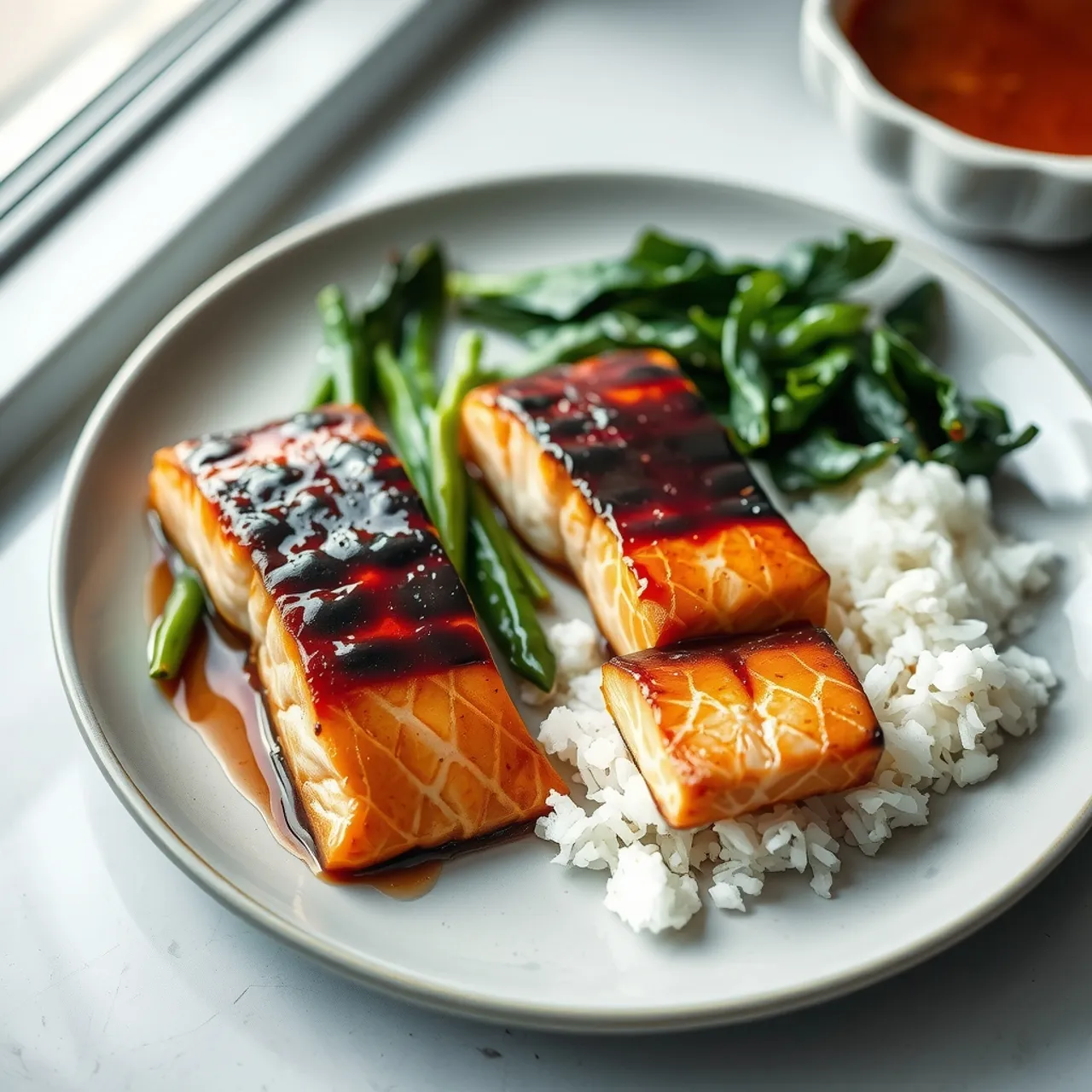
Miso-glazed salmon
Salmon fillets broiled under a sweet white-miso and mirin glaze
Salmon fillets coated in a glaze of white miso, sake, mirin and sugar, rested briefly and cooked under a hot grill until the top caramelises. Cooking the alcohol off before the miso goes in gives a smooth glaze that browns evenly without tasting raw.
- Energy
- 395 kcalper serving
- Prep
- 10 min
- Cook
- 15 min
- Rest
- 30 min
- Protein
- 32 g
How was it?
Equipment
- Small saucepan
- Whisk
- Shallow dish for resting the fish
- Baking tray lined with foil
- Pastry brush
- Fish spatula
- Instant-read thermometer
Before you start
- Run your fingers over the salmon and pull out any pin bones with tweezers.
- Line the baking tray with foil.
- Slice the spring onions and keep them in cold water so they curl and crisp.
Method
-
Cook off the alcohol
2 tbsp sake2 tbsp mirinBring the sake and mirin to a boil in the small saucepan over medium heat and let them bubble for 1 minute.
Done when The sharp smell of alcohol fades and the liquid smells sweet and rice-like.
-
Make the glaze
60 g white miso (shiro miso)10 g sugarTurn the heat to low and whisk in the miso and sugar. Stir for 1–2 minutes, then take the pan off the heat and let it cool.
Done when The glaze is smooth, glossy and as thick as peanut butter, with no sugar grains when you rub a drop between your fingers.
Tip Do not let it boil after the miso goes in: it catches easily and turns bitter.
-
Dry the salmon
600 g salmon fillets, skin onPat the fillets completely dry with kitchen paper on all sides, including the skin.
Done when The paper comes away dry and the flesh feels tacky, not wet.
-
Coat and rest
600 g salmon fillets, skin on60 g white miso (shiro miso)Spread two thirds of the cooled glaze over the flesh side and edges of the fillets. Put them skin side down in the dish, cover and refrigerate for 30 minutes.
Done when The glaze has darkened slightly and clings to the fish in an even layer instead of sliding off.
Tip You can rest them up to 24 hours: the longer they sit, the firmer and more seasoned the fish becomes.
-
Heat the grill
Set the oven grill (broiler) to its highest setting, about 250 °C, with a rack 10–12 cm below the element. Heat it for 10 minutes.
Done when The element glows red across its whole length.
250 °C · 482 °F -
Prepare the tray
1 tsp sunflower oil600 g salmon fillets, skin onBrush the foil with the oil. Wipe any thick clumps of glaze off the fillets with your finger, leaving a thin even coat, and lay them skin side down on the tray.
Done when The fillets are evenly filmed with glaze and you can see the salmon colour through it.
Tip Thick patches of miso burn before the fish is cooked. A thin layer caramelises evenly.
-
Grill the salmon
600 g salmon fillets, skin onGrill for 6 minutes without turning, rotating the tray halfway if your grill heats unevenly.
Done when The glaze is bubbling and browned in spots, and the sides of the fillets have turned pale and opaque two thirds of the way up.
250 °C · 482 °F -
Glaze again and finish
60 g white miso (shiro miso)Brush the rest of the glaze over the top and grill for 2–3 minutes more, watching closely, until the thickest part reaches 55 °C.
Done when The top is deep mahogany with a few blackened edges, and the flesh flakes when pressed but is still slightly translucent in the very centre.
Tip For fish cooked fully through (advised for pregnant women, young children and older people), grill until 63 °C in the centre.
250 °C · 482 °F -
Rest and garnish
2 spring onionsLet the salmon rest on the tray for 2 minutes. Lift the fillets off the skin or serve skin and all, and scatter with the drained spring onion.
Done when The glaze has set to a shiny, slightly sticky crust and juices no longer bubble on the surface.
Common mistakes
The glaze burns black before the fish is cooked.
Fix Wipe the glaze to a thin layer, keep the rack 10–12 cm from the element and add the second coat only for the last 2–3 minutes.
The salmon is dry and chalky.
Fix Use thick fillets and stop at 55 °C in the centre for moist fish; it keeps cooking while it rests.
The glaze tastes harsh and boozy.
Fix Boil the sake and mirin for a full minute before adding the miso.
The fish sticks to the tray.
Fix Oil the foil and cook skin side down without moving the fillets; lift them with a thin fish spatula.
Serving
Serve hot with steamed short-grain rice, blanched spinach or pak choi dressed with a few drops of soy sauce, and a bowl of miso soup.
Storage and reheating
Keeps 1 day in the fridge, covered. Eat cold, flaked over rice, or warm gently in a 150 °C oven for 8–10 minutes until hot through. Do not freeze once cooked.
Make ahead
The glaze keeps 1 week in a closed jar in the fridge. The fillets can be coated and refrigerated up to 24 hours before grilling.
Variations
Saikyo-yaki (overnight marinade)
Coat the fillets with all of the glaze and refrigerate for 1–2 days. Scrape off the miso completely before grilling; the fish becomes firm, sweet and deeply seasoned and browns from the sugars absorbed into the flesh.
Black cod
Use 4 black cod (sablefish) fillets of about 150 g and marinate them for 24–48 hours. Grill for 8–10 minutes in total; the flesh becomes silky and buttery.
Vegan: nasu dengaku
Halve 2 aubergines lengthways and score the flesh in a diamond pattern. Brush with oil, roast cut side up at 200 °C for 25–30 minutes until soft, spread with the glaze and grill for 2–3 minutes until bubbling.