Poland · Main · Medium
Pierogi ruskie
Polish dumplings filled with potato, twaróg and fried onion
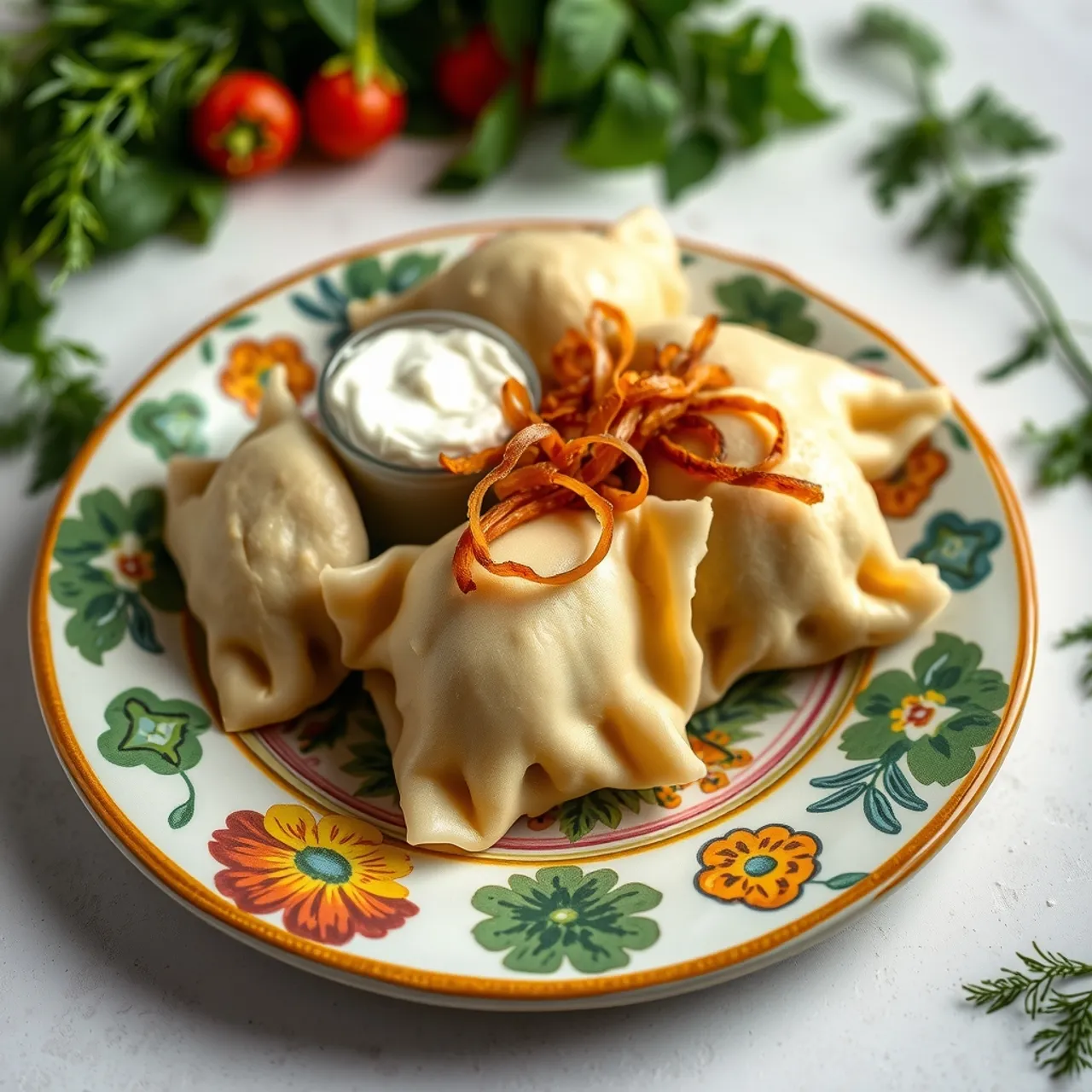
Half-moon dumplings of soft, elastic dough filled with mashed floury potato, crumbly twaróg curd cheese and onion fried in butter, boiled and topped with more onion and sour cream. Dough made with hot water stays pliable and seals well, and a dry, fully cooled filling keeps the pierogi from bursting.
- Energy
- 621 kcalper serving
- Prep
- 1 h
- Cook
- 45 min
- Rest
- 30 min
- Protein
- 21 g
How was it?
Equipment
- Medium saucepan for the potatoes
- Large pot (at least 5 l) for the pierogi
- Frying pan (26 cm)
- Potato ricer or masher
- Rolling pin and a 7 cm round cutter or glass
- Slotted spoon
- 2 floured trays or boards, lined with a clean tea towel
Before you start
- Peel the potatoes and cut them into even 4 cm chunks; keep them in cold water.
- Dice the onions finely.
- Crumble the twaróg with a fork or press it through the ricer.
- Flour the trays for the finished pierogi.
Method
-
Boil the potatoes
700 g floury potatoesCover the potatoes with cold, lightly salted water and bring to the boil over high heat. Lower to medium and simmer for 18–20 minutes.
Done when A knife slides into the largest chunk with no resistance and the edges are just starting to crumble.
-
Fry the onion
300 g onions50 g butterMelt the butter in the frying pan over medium-low heat and add the onion. Cook for 12–15 minutes, stirring every few minutes.
Done when The onion is soft, sweet-smelling and evenly golden, with no dark or burnt edges.
Tip Low heat matters here: burnt onion turns the whole filling bitter.
-
Mash and dry the potatoes
700 g floury potatoesDrain the potatoes well and return them to the hot pan for 1 minute to steam off moisture. Press them through the ricer while hot and spread them out to cool.
Done when The potato is fluffy and dry, with no lumps, and steam has stopped rising from it.
Tip Wet potato makes a sticky filling that leaks out of the seams.
-
Mix the filling
700 g floury potatoes300 g twaróg300 g onions1 tsp fine salt1 tsp black pepperMix the cooled potato with the twaróg, half of the fried onion with its butter, the salt and the pepper. Taste and cool the filling completely.
Done when The filling is firm enough to roll into a ball that holds its shape, and it tastes clearly salted and peppery.
Tip Season it a little more than seems right; the dough is bland and dilutes the flavour.
-
Make the dough
500 g plain flour½ tsp fine salt30 ml sunflower oil250 ml hot waterMix the flour and salt in a bowl, add the oil and pour in the hot water gradually while stirring with a spoon. When cool enough to handle, knead on a floured surface for 6–8 minutes.
Done when The dough is smooth, soft and elastic, like an earlobe, and no longer sticks to your hands.
Tip If it sticks, knead in flour a spoonful at a time; if it cracks, wet your hands and knead again.
70 °C · 158 °F -
Rest the dough
Wrap the dough in cling film or cover with an upturned bowl and leave it at room temperature for 30 minutes.
Done when The dough feels more relaxed and stretches without springing back when you pull a corner.
-
Roll and cut
Roll a quarter of the dough on a lightly floured surface to about 2 mm thick, keeping the rest covered. Cut out circles with the 7 cm cutter.
Done when The dough is thin enough that you can faintly see the work surface through it, but does not tear when lifted.
Tip Gather and re-roll the scraps once only; after that they turn tough.
-
Fill and seal
Put a heaped teaspoon of filling in the centre of each circle. Fold into a half-moon, press the edges firmly together, then pinch or crimp the seam. Lay them on the floured trays, not touching.
Done when The seam is tightly sealed along its whole length with no filling showing and no air pocket inside.
Tip Keep filling off the edges; even a smear of potato stops the dough sealing.
-
Boil the water
4 l water1 tbsp coarse saltBring the water to a rolling boil over high heat and add the coarse salt.
Done when Large bubbles break the surface constantly and do not stop when you stir.
-
Cook the pierogi
Lower 12–15 pierogi into the boiling water and stir gently once so they do not stick to the bottom. Keep at a lively simmer over medium-high heat; once they float, cook for 2 more minutes, then lift them out with the slotted spoon. Repeat in batches.
Done when The pierogi float, look slightly puffed, and the dough at the seam is tender, not floury, when you taste one.
Tip Too many at once drops the temperature and they stick together; cook in batches.
-
Dress and serve
300 g onions120 g sour cream (śmietana)Toss the hot pierogi in the pan with the rest of the fried onion and its butter over low heat for 1 minute. Serve with the sour cream.
Done when Every dumpling is glossy with butter and flecked with golden onion.
Common mistakes
The pierogi burst while boiling.
Fix The edges were not sealed or had filling on them, or the water boiled too hard. Seal firmly, keep edges clean and cook at a lively simmer rather than a violent boil.
The dough is tough and thick.
Fix It was rolled too thick or re-rolled too many times. Roll to about 2 mm and re-roll scraps only once.
The filling tastes flat.
Fix Under-seasoning. The filling should taste clearly salty and peppery on its own before it goes into the dough.
They stick together on the tray.
Fix Flour the trays well, keep the pierogi apart, and cook or freeze them within 1 hour of shaping.
Serving
Serve 7–8 pierogi per person, hot, with the buttery fried onion on top and sour cream on the side. Leftovers are traditionally pan-fried in butter until golden on both sides. A cucumber salad with dill (mizeria) is the classic side.
Storage and reheating
Cooked pierogi keep 3 days in the fridge, covered. Reheat by frying in butter over medium heat for 3–4 minutes per side until golden and hot through. Freeze uncooked pierogi in a single layer on a floured tray, then bag them; they keep 3 months and are boiled from frozen for 2–3 minutes longer.
Make ahead
Make the filling up to 1 day ahead and keep it covered in the fridge. Shaped pierogi are best frozen rather than kept in the fridge, where they turn soggy.
Variations
Fried with bacon
Fry 100 g of diced smoked bacon (skwarki) until crisp and spoon it over the pierogi with the onion. The dish is then no longer vegetarian.
Egg dough
Replace 50 ml of the hot water with 1 egg beaten into warm water. The dough is a little firmer and easier to handle, but less tender.
Vegan
Leave out the twaróg and use 900 g of potatoes; fry the onion in sunflower oil and add a little extra pepper. Serve with fried onion only or with plant-based sour cream.